
A Call That Starts With "I Pulled the Cord and Now It Won't Move"
A technician pulls up to a house off a side street and the homeowner is standing in the driveway next to a garage door that's stuck halfway up, cables hanging loose on one side. The story is almost always the same: the power went out during an afternoon storm, the opener wouldn't respond, so someone grabbed the red emergency release cord to get the car out for work. The door came down fine going up, but on the way back in it jammed, or it wouldn't reconnect to the opener, or worse, it dropped the last foot instead of closing smoothly. That drop is the tell. It usually means a spring was already weak or broken, and the release cord just removed the only thing holding the door's full weight.
What the Cord Is Actually For
The emergency release is the short rope with a red handle hanging from the trolley on the opener's rail. Pulling it disconnects the door from the opener's carriage, which lets you lift and lower the door by hand. It exists for exactly one situation: the opener has lost power or failed, and you need to move the door manually in a controlled way. That's it. It's not a troubleshooting tool, and it's not meant to be used as a workaround for a door that's already misbehaving.
How Badly This Goes When the Timing Is Wrong
A standard garage door can weigh anywhere from about 130 to 400 pounds depending on material and size. Springs are what counteract that weight, whether the door is opening, closing, or sitting still. When you pull the release cord, you're removing the opener's grip but not the spring's job. If the spring is already broken, corroded through, or simply worn out, pulling the cord leaves the door's full weight hanging on cables and rollers alone. The results range from a door that won't budge, to one that free-falls the moment it's released, to cables jumping their drums and the door dropping unevenly to one side. None of those are cheap surprises, and none of them are safe to stand under.
Why This Risk Is Higher Here
Humidity and salt air speed up corrosion on spring coils and cable ends, so a spring that looks intact can be more fatigued than it appears. Wind-load stress during storm season adds extra open-close cycles and strain right when outages are also most likely to tempt someone into using the manual release. The two risks tend to show up together: the same stretch of weather that knocks out power is the stretch that's been quietly wearing down the hardware.
The Specific Actions That Prevent It
- Do a monthly balance test. With the door fully closed, pull the release cord, then lift the door by hand about halfway. It should move smoothly and stay put on its own. If it feels heavy, drops on its own, or you need real effort to lift it, the spring is compromised — don't keep operating the door manually or by opener until it's checked.
- Only pull the cord when the door is closed, whenever possible. Releasing it while the door is open removes the opener's support instantly, and if the spring can't fully carry the weight, there's nothing left to stop a fast drop.
- Look before you pull. Visible gaps in a spring coil, frayed or slack cables, or a door that's visibly sagging to one side are signs to leave the cord alone and call for a repair instead.
- Reconnect it properly once power is back — the trolley needs to re-engage with the carriage, not just hang loose, or the opener will run without actually moving the door.
When to Call Plantation Door & Opener
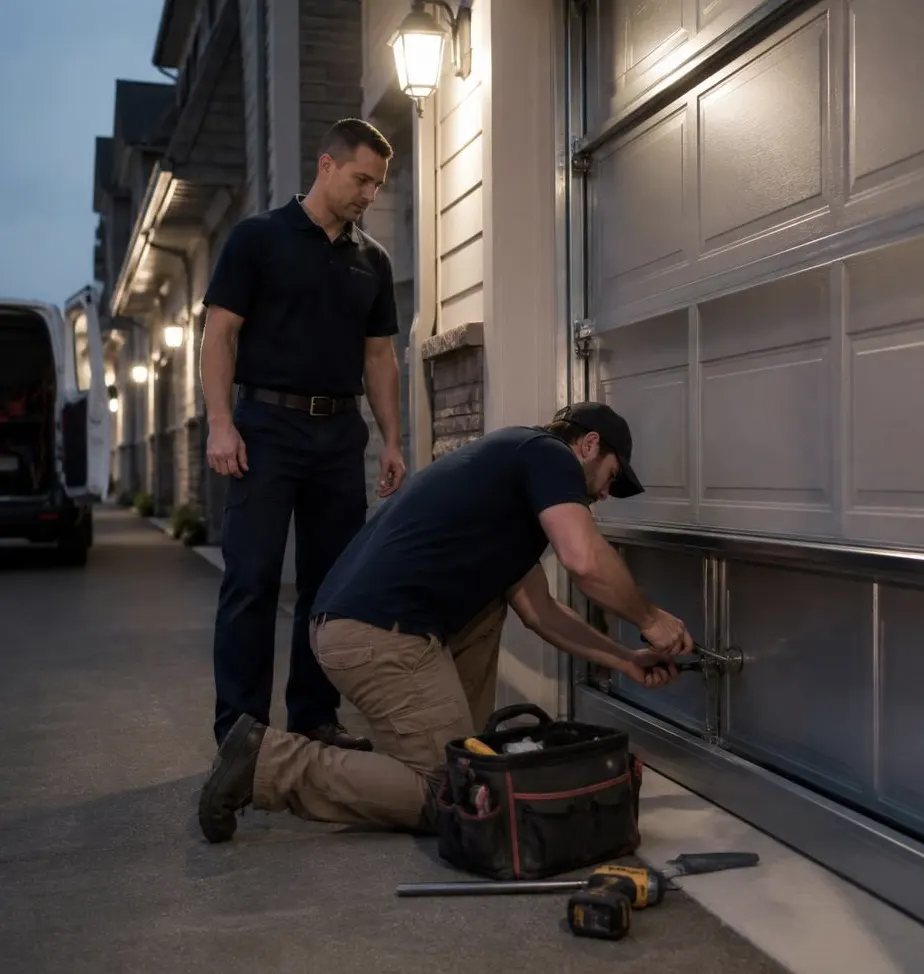
If the balance test feels off, if a spring has already let go, or if the door jumped track after a manual release, that's a job for a technician rather than a second attempt at the cord. Plantation Door & Opener handles Garage Door Spring Repair and Off Track Door Repair for exactly these situations — diagnosing whether it's the spring, the cables, or the rollers, and getting the door back to moving safely under its own balance before anyone relies on that release cord again.
If your garage door hasn't had its cables, springs, or rollers looked at recently, call Plantation Door & Opener today and get it checked before the next power outage puts it to the test.